 Pagine
🃏 Flashcards and quiz
Pick a list. Flip cards to learn, then take a 10-question quiz. Progress is saved on this device.
List 1 abate – burgeon
🖨️ Print- abateverb
- To become less intense or widespread.
- “By evening the storm had abated, and the ferries ran again.”
- aberrantadjective
- Departing from what is normal or expected.
- “The lab flagged the aberrant reading and repeated the test.”
- abstainverb
- To choose not to do something.
- “Three council members abstained from the vote.”
- acumennoun
- Sharp skill in judging and deciding, especially in business.
- “Her financial acumen turned the tiny bakery into a chain.”
- admonishverb
- To warn or scold firmly but gently.
- “The librarian admonished the boys for shouting in the reading room.”
- aestheticadjective
- Relating to beauty or artistic taste.
- “The building’s aesthetic appeal mattered as much as its cost.”
- alacritynoun
- Cheerful readiness or eagerness.
- “He accepted the invitation with alacrity.”
- ameliorateverb
- To make a bad situation better.
- “New wells helped ameliorate the village’s water shortage.”
- anachronismnoun
- Something placed in the wrong historical period.
- “A wristwatch on a Roman soldier is an obvious anachronism.”
- anomalynoun
- Something that deviates from the usual pattern.
- “A warm week in January was an anomaly in the records.”
- antipathynoun
- A strong, settled dislike.
- “His antipathy toward long meetings was well known.”
- apathynoun
- Lack of interest or concern.
- “Voter apathy kept turnout below thirty percent.”
- appeaseverb
- To calm someone by giving them what they want.
- “The manager appeased the customer with a refund.”
- arcaneadjective
- Known or understood by very few people.
- “The contract was full of arcane legal phrases.”
- arduousadjective
- Needing great effort; difficult and tiring.
- “The arduous climb took nine hours.”
- articulateadjective
- Able to express ideas clearly.
- “The articulate student explained the proof in two minutes.”
- asceticadjective
- Avoiding comfort and pleasure, often for spiritual reasons.
- “The monk lived an ascetic life with few possessions.”
- assuageverb
- To ease or soothe a feeling or need.
- “A cool drink assuaged her thirst.”
- audaciousadjective
- Boldly daring, sometimes recklessly.
- “It was an audacious plan to sail around the world alone.”
- austereadjective
- Severe and plain, without decoration or comfort.
- “The austere office held only a desk and a chair.”
- banaladjective
- So ordinary that it is dull.
- “The speech was full of banal phrases about “the future.””
- believerb
- To give a false impression of; to contradict.
- “Her calm voice belied her nervousness.”
- bolsterverb
- To support or strengthen.
- “New evidence bolstered the detective’s theory.”
- bombasticadjective
- Pompous and inflated in language.
- “The bombastic ad promised a “revolution in toothpaste.””
- burgeonverb
- To grow or develop quickly.
- “Interest in electric bikes has burgeoned in the city.”
List 2 cacophony – desultory
🖨️ Print- cacophonynoun
- A harsh mixture of loud sounds.
- “The cacophony of car horns filled the street.”
- candornoun
- The quality of being open and honest.
- “We appreciated the coach’s candor about our mistakes.”
- capriciousadjective
- Changing mood or behavior suddenly and unpredictably.
- “Spring weather here is capricious.”
- castigateverb
- To criticize or punish severely.
- “The editorial castigated the company for the spill.”
- catalystnoun
- Something that causes or speeds up change.
- “The new park became a catalyst for the neighborhood’s revival.”
- causticadjective
- Bitterly sarcastic; also able to burn by chemical action.
- “His caustic remarks silenced the room.”
- censurenoun
- Strong, formal disapproval.
- “The senator faced censure from her own party.”
- chicanerynoun
- Clever trickery used to deceive.
- “The audit uncovered years of financial chicanery.”
- coalesceverb
- To come together to form one whole.
- “Scattered protests coalesced into a national movement.”
- cogentadjective
- Clear, logical and convincing.
- “She made a cogent case for a later start time.”
- commensurateadjective
- Corresponding in size or degree; in proportion.
- “Pay should be commensurate with experience.”
- complacentadjective
- Uncritically satisfied with oneself, ignoring dangers.
- “After three wins, the team grew complacent.”
- conciliatoryadjective
- Meant to make peace or reduce anger.
- “He sent a conciliatory email after the argument.”
- conundrumnoun
- A confusing and difficult problem.
- “Where to seat everyone at the wedding was a real conundrum.”
- convolutedadjective
- Extremely complex and hard to follow.
- “The convoluted instructions confused everyone.”
- corroborateverb
- To confirm or support with evidence.
- “Two witnesses corroborated her account.”
- credulousadjective
- Too ready to believe things.
- “Credulous readers shared the fake story widely.”
- culpableadjective
- Deserving blame.
- “The report found no one culpable for the delay.”
- cursoryadjective
- Hasty and not thorough.
- “A cursory glance missed the error on page two.”
- dearthnoun
- A scarcity or lack.
- “There is a dearth of affordable housing downtown.”
- deferencenoun
- Polite respect for another’s opinion or authority.
- “In deference to the host, we removed our shoes.”
- delineateverb
- To describe or mark out precisely.
- “The map delineates the park’s boundaries.”
- denigrateverb
- To criticize unfairly; to belittle.
- “It is unkind to denigrate a classmate’s work.”
- derideverb
- To mock or express contempt for.
- “Critics derided the film, but audiences loved it.”
- desultoryadjective
- Lacking a plan or purpose; random.
- “They made desultory conversation while waiting.”
List 3 diatribe – eulogy
🖨️ Print- diatribenoun
- A bitter, angry verbal attack.
- “The post turned into a diatribe against the referee.”
- didacticadjective
- Intended to teach, often in a preachy way.
- “The novel was too didactic to enjoy.”
- diffidentadjective
- Shy and lacking self-confidence.
- “The diffident intern rarely spoke in meetings.”
- digressverb
- To wander from the main topic.
- “The professor often digressed into stories about her travels.”
- dilatoryadjective
- Slow to act; causing delay.
- “The dilatory contractor finished months late.”
- discernverb
- To perceive or recognize, often with difficulty.
- “In the fog we could barely discern the shore.”
- disparateadjective
- Fundamentally different; not comparable.
- “The anthology gathers disparate voices from six continents.”
- dissembleverb
- To hide one’s true feelings or motives.
- “He dissembled, pretending he had never seen the letter.”
- dogmaticadjective
- Insisting one’s opinions are certainly true.
- “A dogmatic leader rarely listens to advice.”
- dupeverb
- To deceive or trick.
- “Scammers duped hundreds of buyers with fake tickets.”
- ebullientadjective
- Cheerful and full of energy.
- “The ebullient host greeted every guest by name.”
- eclecticadjective
- Drawn from many different sources or styles.
- “Her eclectic playlist mixed jazz, opera and K-pop.”
- efficacynoun
- The ability to produce the intended result.
- “Trials tested the vaccine’s efficacy.”
- effronterynoun
- Shameless boldness; nerve.
- “He had the effrontery to ask for a raise after missing the deadline.”
- elicitverb
- To draw out a response or reaction.
- “The question elicited a long silence.”
- eloquentadjective
- Fluent and persuasive in speaking or writing.
- “She gave an eloquent tribute to her teacher.”
- embellishverb
- To add details, sometimes untrue, to make something more interesting.
- “Grandpa embellished the fishing story every year.”
- empiricaladjective
- Based on observation or experiment.
- “The claim needs empirical support.”
- emulateverb
- To imitate someone admired.
- “Young players emulate their heroes’ moves.”
- enervateverb
- To drain of energy or strength.
- “The humid heat enervated the hikers.”
- ephemeraladjective
- Lasting a very short time.
- “Fame on social media is often ephemeral.”
- equivocaladjective
- Ambiguous, often deliberately.
- “The spokesperson gave an equivocal answer.”
- eruditeadjective
- Having or showing great learning.
- “The erudite lecture cited sources in four languages.”
- esotericadjective
- Understood only by a small, specialized group.
- “The forum discusses esoteric details of clock repair.”
- eulogynoun
- A speech praising someone, especially at a funeral.
- “Her brother delivered a moving eulogy.”
List 4 exacerbate – incongruous
🖨️ Print- exacerbateverb
- To make a problem worse.
- “Skipping sleep exacerbated his headaches.”
- exculpateverb
- To show or declare someone not guilty.
- “DNA evidence exculpated the suspect.”
- exigentadjective
- Pressing; demanding immediate action.
- “Exigent circumstances allowed officers to enter.”
- exonerateverb
- To clear someone of blame.
- “The inquiry exonerated the pilot.”
- expedientadjective
- Convenient and practical, though possibly not right.
- “Cutting the budget was expedient but short-sighted.”
- extantadjective
- Still in existence.
- “Only two copies of the map are extant.”
- facetiousadjective
- Treating serious matters with inappropriate humor.
- “His facetious comment annoyed the panel.”
- fastidiousadjective
- Very attentive to detail and cleanliness.
- “The fastidious chef wiped every plate rim.”
- ferventadjective
- Having or showing intense feeling.
- “She is a fervent supporter of public libraries.”
- floutverb
- To openly disregard a rule.
- “Drivers flouted the new speed limit.”
- fomentverb
- To stir up trouble or conflict.
- “Rumors fomented distrust between the teams.”
- frugaladjective
- Careful with money; economical.
- “A frugal student, he cooked every meal at home.”
- futileadjective
- Incapable of producing any useful result.
- “Shouting at the printer was futile.”
- garrulousadjective
- Excessively talkative.
- “The garrulous passenger talked the whole flight.”
- gregariousadjective
- Fond of company; sociable.
- “Gregarious by nature, she joined five clubs.”
- guilenoun
- Sly or cunning intelligence.
- “The fox in the fable wins by guile, not strength.”
- hackneyedadjective
- Overused and therefore unoriginal.
- ““It was a dark and stormy night” is a hackneyed opening.”
- haranguenoun
- A long, forceful, critical speech.
- “The coach’s halftime harangue lasted ten minutes.”
- hegemonynoun
- Dominance of one group or state over others.
- “The empire’s hegemony lasted two centuries.”
- iconoclastnoun
- A person who attacks cherished beliefs.
- “The iconoclast questioned every tradition of the art world.”
- idiosyncrasynoun
- A distinctive habit or quirk.
- “Wearing mismatched socks is her idiosyncrasy.”
- impetuousadjective
- Acting quickly without thinking.
- “An impetuous purchase left him with three guitars.”
- implacableadjective
- Unable to be calmed or satisfied.
- “The implacable critic found fault with everything.”
- inchoateadjective
- Just begun and not fully formed.
- “The plan was still inchoate.”
- incongruousadjective
- Out of place; not in harmony.
- “A tuxedo looked incongruous at the beach party.”
List 5 indolent – nascent
🖨️ Print- indolentadjective
- Wanting to avoid activity or effort; lazy.
- “The indolent cat slept through the morning.”
- ineffableadjective
- Too great to be expressed in words.
- “They felt an ineffable joy at the summit.”
- inexorableadjective
- Impossible to stop or prevent.
- “The inexorable rise of the tide covered the rocks.”
- ingenuousadjective
- Innocent and unsuspecting.
- “Her ingenuous question made the room smile.”
- innocuousadjective
- Harmless; not offensive.
- “The joke seemed innocuous but hurt his feelings.”
- insipidadjective
- Lacking flavor, interest or energy.
- “The soup was insipid without salt.”
- intransigentadjective
- Unwilling to change one’s views.
- “Both sides remained intransigent, so talks failed.”
- inundateverb
- To overwhelm with a great amount.
- “Fans inundated the author with letters.”
- irascibleadjective
- Easily made angry.
- “The irascible neighbor shouted at the dog.”
- laconicadjective
- Using very few words.
- “His laconic reply was simply “No.””
- laudverb
- To praise highly.
- “Critics lauded the young pianist.”
- lethargicadjective
- Sluggish and lacking energy.
- “The flu left her lethargic for a week.”
- loquaciousadjective
- Very talkative.
- “The loquacious tour guide never ran out of stories.”
- lucidadjective
- Clearly expressed and easy to understand.
- “The textbook gives a lucid explanation of photosynthesis.”
- magnanimousadjective
- Generous and forgiving, especially to a rival.
- “The champion was magnanimous in victory.”
- malleableadjective
- Easily shaped or influenced.
- “Gold is a malleable metal.”
- mavericknoun
- An independent thinker who goes their own way.
- “The maverick engineer ignored the old design rules.”
- mendaciousadjective
- Not telling the truth; lying.
- “The mendacious ad claimed the cream erased wrinkles overnight.”
- meticulousadjective
- Showing great attention to detail.
- “Her meticulous notes made studying easy.”
- misanthropenoun
- A person who dislikes humankind.
- “The story’s misanthrope learns to love his neighbors.”
- mitigateverb
- To make less severe.
- “Sea walls mitigate flood damage.”
- mollifyverb
- To calm someone’s anger.
- “A sincere apology mollified the customer.”
- moroseadjective
- Sullen and gloomy.
- “He was morose after the loss.”
- mundaneadjective
- Ordinary and dull.
- “Even mundane chores are fun with music.”
- nascentadjective
- Just beginning to develop.
- “The nascent company had only four employees.”
List 6 obdurate – proliferate
🖨️ Print- obdurateadjective
- Stubbornly refusing to change.
- “The obdurate official denied every appeal.”
- obsequiousadjective
- Too eager to please or obey.
- “The obsequious waiter refilled our water every minute.”
- obstinateadjective
- Stubbornly holding to an opinion or course.
- “The obstinate mule would not cross the bridge.”
- obviateverb
- To remove a need or difficulty.
- “Online forms obviate the need to visit the office.”
- officiousadjective
- Annoyingly eager to give unwanted help or orders.
- “An officious guard insisted on checking our bags twice.”
- onerousadjective
- Involving heavy effort or burden.
- “The new rules placed onerous demands on small shops.”
- opaqueadjective
- Not able to be seen through; hard to understand.
- “The tax code is notoriously opaque.”
- opprobriumnoun
- Harsh public criticism or disgrace.
- “The company faced widespread opprobrium after the leak.”
- ostentatiousadjective
- Showy, designed to impress.
- “The ostentatious car was painted gold.”
- paragonnoun
- A perfect example of a quality.
- “She is a paragon of patience.”
- parsimoniousadjective
- Extremely unwilling to spend money.
- “The parsimonious landlord refused to fix the heater.”
- pedanticadjective
- Overly concerned with minor rules or details.
- “His pedantic corrections slowed the meeting.”
- penchantnoun
- A strong liking or tendency.
- “She has a penchant for mystery novels.”
- perfunctoryadjective
- Done with minimal effort, as a routine.
- “He gave a perfunctory wave and kept walking.”
- perniciousadjective
- Harmful in a gradual or subtle way.
- “Misinformation has a pernicious effect on trust.”
- perspicaciousadjective
- Quick to notice and understand.
- “A perspicacious reader spots the clue early.”
- placateverb
- To make someone less angry.
- “The airline placated passengers with meal vouchers.”
- plethoranoun
- An excessive amount.
- “The menu offered a plethora of choices.”
- polemicnoun
- A strong written or spoken attack on an idea.
- “The pamphlet was a polemic against the new tax.”
- pragmaticadjective
- Dealing with things practically and realistically.
- “A pragmatic solution beat the perfect one.”
- precipitateadjective
- Done suddenly and without careful thought.
- “Selling the house was a precipitate decision.”
- prevaricateverb
- To avoid telling the truth by speaking evasively.
- “When asked about the vase, he prevaricated.”
- pristineadjective
- In original condition; perfectly clean.
- “The vintage comic was in pristine condition.”
- prodigaladjective
- Spending money or resources wastefully.
- “The prodigal heir spent his fortune in a year.”
- proliferateverb
- To increase rapidly in number.
- “Food trucks have proliferated downtown.”
List 7 propensity – strident
🖨️ Print- propensitynoun
- A natural tendency to behave a certain way.
- “Toddlers have a propensity to climb.”
- prosaicadjective
- Dull and lacking imagination.
- “The prosaic report put everyone to sleep.”
- prudentadjective
- Acting with care and thought for the future.
- “It is prudent to back up your files.”
- quiescentadjective
- Inactive or quiet, often temporarily.
- “The volcano has been quiescent for a century.”
- quixoticadjective
- Idealistic in an unrealistic way.
- “His quixotic plan was to end traffic with kindness.”
- rancornoun
- Bitter, long-lasting resentment.
- “The rancor between the families lasted decades.”
- recalcitrantadjective
- Stubbornly uncooperative.
- “The recalcitrant toddler refused to put on shoes.”
- reconditeadjective
- Little known; obscure.
- “The scholar studied recondite medieval texts.”
- refuteverb
- To prove a statement wrong.
- “The data refuted the old theory.”
- relegateverb
- To move to a lower or less important position.
- “The team was relegated to the second division.”
- reprobatenoun
- An unprincipled person.
- “In the play, the reprobate finally repents.”
- repudiateverb
- To reject or refuse to accept.
- “The scientist repudiated her earlier findings.”
- rescindverb
- To cancel officially.
- “The school rescinded the new dress code.”
- reticentadjective
- Not revealing one’s thoughts readily.
- “He was reticent about his past.”
- reverentadjective
- Feeling or showing deep respect.
- “Visitors stood in reverent silence at the memorial.”
- sagaciousadjective
- Wise and shrewd.
- “The sagacious elder settled the dispute.”
- salientadjective
- Most noticeable or important.
- “The salient point is that costs have doubled.”
- sanctionnoun or verb
- Official permission; or a penalty.
- “The league sanctioned the match; it also sanctioned the team for misconduct.”
- satiateverb
- To satisfy fully.
- “The feast satiated even the hungriest guests.”
- scrupulousadjective
- Careful and thorough; morally strict.
- “She is scrupulous about citing sources.”
- soporificadjective
- Tending to cause sleep.
- “The soporific lecture emptied the back rows.”
- sparseadjective
- Thinly scattered.
- “Trees are sparse on the windy ridge.”
- spuriousadjective
- False or fake, though seeming genuine.
- “The study found a spurious link between shoe size and reading.”
- stoicadjective
- Enduring pain or hardship without complaint.
- “She remained stoic through the long recovery.”
- stridentadjective
- Loud and harsh; forceful in expression.
- “Strident voices dominated the debate.”
List 8 substantiate – zealot
🖨️ Print- substantiateverb
- To provide evidence to support a claim.
- “Can you substantiate that statistic?”
- superciliousadjective
- Behaving as if superior to others.
- “The supercilious clerk ignored our questions.”
- superfluousadjective
- Unnecessary; more than needed.
- “Cut the superfluous words from your essay.”
- sycophantnoun
- A person who flatters to gain advantage.
- “The king was surrounded by sycophants.”
- tacitadjective
- Understood without being stated.
- “There was a tacit agreement not to discuss politics.”
- tantamountadjective
- Equivalent in seriousness to.
- “Ignoring the warning was tantamount to approving the risk.”
- tenaciousadjective
- Holding firmly; persistent.
- “The tenacious reporter followed the story for years.”
- tenuousadjective
- Very weak or slight.
- “The link between the two events is tenuous.”
- timorousadjective
- Showing nervousness or lack of confidence.
- “A timorous knock came at the door.”
- torpornoun
- A state of physical or mental inactivity.
- “Hibernating bears enter a deep torpor.”
- tractableadjective
- Easy to control or influence.
- “The problem became tractable once we split it into parts.”
- transientadjective
- Lasting only a short time.
- “The pain was transient and faded by morning.”
- truculentadjective
- Eager to argue or fight.
- “The truculent fan was escorted out.”
- ubiquitousadjective
- Present everywhere.
- “Smartphones are ubiquitous on the train.”
- undermineverb
- To weaken gradually.
- “Constant interruptions undermined her confidence.”
- unequivocaladjective
- Leaving no doubt; unambiguous.
- “The answer was an unequivocal yes.”
- vacillateverb
- To waver between options.
- “He vacillated between law and medicine.”
- venerateverb
- To regard with great respect.
- “The village venerates its oldest tree.”
- veracitynoun
- Truthfulness; accuracy.
- “Reporters checked the veracity of the claim.”
- verboseadjective
- Using more words than needed.
- “The verbose manual ran to 400 pages.”
- vexverb
- To annoy or worry.
- “The missing puzzle piece vexed her all evening.”
- vindicateverb
- To clear of blame or prove right.
- “The results vindicated the researchers’ approach.”
- vituperativeadjective
- Bitter and abusive in language.
- “The vituperative review upset the young author.”
- volatileadjective
- Liable to change rapidly and unpredictably.
- “Fuel prices are volatile.”
- zealotnoun
- A person who is fanatical about a cause.
- “A fitness zealot, he trains twice a day.”
Keep studying
Great novels and essays use this vocabulary on every page.
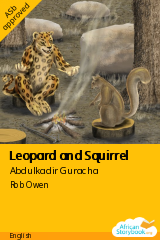 Leopard and SquirrelAbdulkadir Guracha, Elizabeth Laird
Frequently asked questions
How many vocabulary words are on the GRE?
There is no official list. Text completion and sentence equivalence questions test words in context, so focus on high-frequency academic words and learn them with example sentences.
What is the best way to learn GRE words?
Study 25 words a week with flashcards, use each in your own sentence, and review missed words often. Reading quality journalism and classic novels shows the words in real use.
Are these official GRE words?
No. ETS does not publish a word list. These are common words in graduate-level reading, chosen and defined by Pagine.
GRE® is a registered trademark of ETS. Pagine is not affiliated with or endorsed by these organizations. Practice questions and word lists are written by Pagine; for official materials, fees and dates, visit the test maker’s website.
Read a little every day
Free classics, offline reading and daily streaks in the Pagine app, on iPhone, iPad and Android.